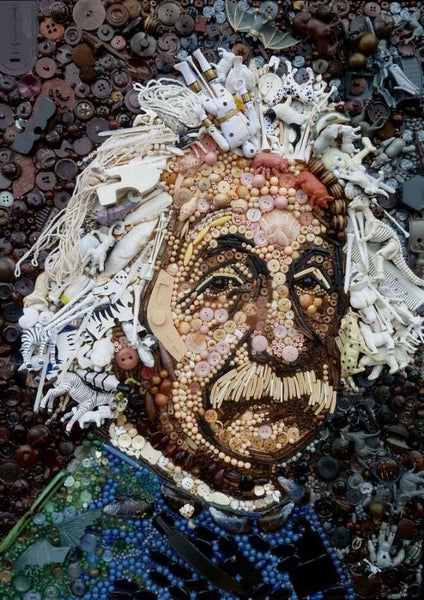
The Canvas of Dreams: Where Imagination Meets Reality
Imagine waking up to a world where colors sing, where shapes dance beyond their usual boundaries, and where every thought has the potential to become something tangible. This is the realm of imagination—a place unbounded by logic or constraint. Yet, what if this realm could be more than just a fleeting escape? What if it could be a bridge, a tool, or even a mirror to our deepest aspirations? This is the essence of “The Canvas of Dreams,” a concept that explores how imagination and reality intertwine to shape our world, our art, and our lives.
At its core, imagination is the spark that ignites innovation and creativity. It is the force behind every masterpiece ever painted, every symphony ever composed, and every groundbreaking invention ever conceived. Without imagination, humanity would still be confined to the limitations of the present, unable to envision a better future or explore the uncharted territories of thought. But imagination alone is not enough. For dreams to take form, they must meet the solid ground of reality—a place where ideas are tested, refined, and brought to life.
The Power of Imagination
Imagination is not merely a childish fancy or an escape from reality. It is a fundamental aspect of human cognition, a cognitive tool that allows us to visualize possibilities, solve problems, and create meaning. Psychologists often describe imagination as the ability to form mental images or concepts of things not present to the senses. This mental flexibility is what enables us to plan, to empathize, and to innovate.
Consider the story of Leonardo da Vinci, a man whose imagination knew no bounds. He envisioned flying machines centuries before the Wright brothers took to the skies, sketched designs for armored vehicles, and even conceptualized the idea of an early form of a helicopter. His imagination did not remain confined to the pages of his notebooks; it inspired generations of inventors and artists to push the boundaries of what was possible. This is the power of imagination—it does not just dream; it challenges, it innovates, and it transforms.
The Role of Reality in Shaping Dreams
While imagination fuels the fire of possibility, reality provides the structure within which those possibilities can flourish. Reality is the canvas upon which our dreams are painted, the medium through which they take shape. Without reality, imagination would remain a fleeting thought, a whisper in the wind. But with reality, imagination becomes actionable, tangible, and transformative.
Take, for example, the field of architecture. An architect begins with an idea—a vision of a building that does not yet exist. This idea is born from imagination, but it is reality that dictates whether that building can be constructed, whether it will stand tall, and whether it will serve its intended purpose. The architect must consider the laws of physics, the availability of materials, and the needs of the people who will inhabit the space. In this way, reality becomes the collaborator in the creative process, ensuring that dreams do not remain mere fantasies but evolve into something real and meaningful.
The Intersection of Imagination and Reality
The intersection of imagination and reality is where magic happens. It is the point where ideas transition from abstract concepts to concrete achievements. This intersection is not a static place but a dynamic space where creativity and pragmatism coexist. It is where artists blend colors on a canvas, where writers craft stories that resonate with readers, and where entrepreneurs turn innovative ideas into successful businesses.
One of the most beautiful examples of this intersection is the world of filmmaking. A filmmaker begins with a script—a product of imagination. But to bring that script to life, the filmmaker must navigate the realities of budget constraints, casting decisions, and technical challenges. The final film is a testament to the collaboration between imagination and reality. The director’s vision shapes the narrative, but the realities of production shape the execution. The result is a film that captures the essence of the filmmaker’s dream while resonating with audiences on a profound level.
Creativity as the Bridge
Creativity is the bridge that connects imagination and reality. It is the process of turning abstract ideas into tangible outcomes, of transforming dreams into realities. Creativity is not just about artistic expression; it is about problem-solving, innovation, and adaptation. It is the force that allows us to see beyond the obvious and to find new ways of doing things.
In the business world, creativity is often the driving force behind success. Companies that thrive are those that encourage their employees to think outside the box, to challenge the status quo, and to envision new possibilities. For example, the rise of companies like Apple and Tesla can be attributed to the creative visions of their founders, who imagined products and technologies that did not yet exist. These visions were not mere fantasies; they were carefully crafted dreams that were brought to life through innovation and persistence.
The Role of Technology in Blending Imagination and Reality
Technology has become one of the most powerful tools for bridging the gap between imagination and reality. From virtual reality to artificial intelligence, technology is expanding the boundaries of what we can imagine and achieve. Virtual reality, for instance, allows us to step into a world of our own creation, to experience dreams in a way that was once only possible in our minds. Artists can now paint in three dimensions, architects can walk through their designs before they are built, and writers can immerse their readers in entirely new worlds.
Artificial intelligence, on the other hand, is transforming the way we create and innovate. AI algorithms can generate art, compose music, and even write stories, pushing the boundaries of what we consider creative. While some may argue that AI lacks the emotional depth of human creativity, there is no denying its potential to expand our imaginative horizons. It allows us to explore new territories of thought and to collaborate with machines in ways that were once unimaginable.
Nurturing the Canvas of Dreams
If imagination and reality are the twin forces that shape our world, then the canvas of dreams is the space where they meet. But how do we nurture this canvas? How do we ensure that our dreams do not remain confined to the realm of the imaginary but are instead given the opportunity to flourish in reality? The answer lies in a combination of curiosity, discipline, and courage.
First, we must cultivate curiosity. Curiosity is the fuel that drives imagination. It is the desire to explore, to question, and to seek out new experiences. Without curiosity, our minds become stagnant, and our dreams remain static. To nurture curiosity, we must embrace a mindset of lifelong learning. We must be open to new ideas, to different perspectives, and to the unknown. This mindset not only enriches our imagination but also prepares us to navigate the realities that shape our dreams.
Second, we must embrace discipline. While imagination allows us to dream, discipline is what turns those dreams into reality. Discipline is the commitment to putting in the work, to refining our ideas, and to persevering in the face of challenges. It is the daily practice of showing up, of putting in the effort, and of staying true to our vision. Without discipline, even the most brilliant ideas remain unrealized. With discipline, however, those ideas can become something extraordinary.
Finally, we must have courage. Courage is the willingness to take risks, to step outside of our comfort zones, and to embrace the unknown. It is the courage to pursue our dreams even when the path is unclear, even when the outcome is uncertain. Courage is what allows us to turn our dreams into reality, to take that first step, and to keep moving forward despite the obstacles.
The Importance of Play
In the pursuit of nurturing the canvas of dreams, it is essential not to overlook the power of play. Play is not just for children; it is a vital aspect of human creativity and innovation. Play allows us to explore without fear of failure, to experiment with new ideas, and to find joy in the process of creation. It is through play that we often stumble upon our most innovative ideas, those that have the potential to change the world.
Consider the story of Google’s “20% time,” a policy that allowed employees to spend one day a week working on projects of their own choosing. This policy led to the creation of some of Google’s most successful products, including Gmail and Google Maps. The freedom to play and explore without the constraints of traditional work schedules allowed employees to tap into their imagination and bring their dreams to life.
Embracing Failure
No discussion of nurturing the canvas of dreams would be complete without acknowledging the role of failure. Failure is an inevitable part of the creative process. It is the stepping stone that leads to success, the lesson that teaches us resilience, and the catalyst that sparks innovation. Without failure, we would never learn, never grow, and never push the boundaries of what is possible.
Consider the story of J.K. Rowling, who faced numerous rejections before her Harry Potter series became a global phenomenon. Or the story of Thomas Edison, who famously said, “I have not failed. I’ve just found 10,000 ways that won’t work.” These stories remind us that failure is not the end of the road but a necessary part of the journey. It is through failure that we refine our ideas, learn from our mistakes, and ultimately succeed.
The Future of the Canvas of Dreams
As we look to the future, the canvas of dreams is only becoming more expansive. With advancements in technology, the boundaries between imagination and reality are blurring like never before. Virtual reality, augmented reality, and artificial intelligence are opening up new avenues for creativity and innovation. These technologies are not just tools; they are collaborators that allow us to explore, to create, and to dream in ways that were once unimaginable.
One of the most exciting developments in this space is the rise of the metaverse—a virtual world where users can interact, create, and explore. The metaverse is a testament to the power of imagination, a space where the boundaries of reality are redefined. It is a place where artists can showcase their work in immersive environments, where businesses can create virtual storefronts, and where communities can come together in entirely new ways. The metaverse is not just a glimpse into the future; it is a canvas where the dreams of today are shaping the realities of tomorrow.
The Ethical Implications
With great power comes great responsibility, and the canvas of dreams is no exception. As we continue to push the boundaries of imagination and reality, we must also consider the ethical implications of our creations. How do we ensure that our dreams do not come at the expense of others? How do we balance innovation with responsibility? These are questions that will shape the future of the canvas of dreams and determine whether it becomes a force for good or a source of harm.
For example, the rise of deepfake technology has raised concerns about the potential for misuse and deception. While this technology allows for incredible creative possibilities, it also has the power to spread misinformation and manipulate public opinion. Similarly, the use of AI in creative fields raises questions about ownership, authenticity, and the role of human creativity in an increasingly automated world. These are complex issues that require careful consideration and thoughtful discussion.
The Role of Community
As we navigate the future of the canvas of dreams, the role of community cannot be overstated. Creativity thrives in environments where ideas are shared, where collaboration is encouraged, and where diverse perspectives are valued. Communities—whether online or offline—provide the support, inspiration, and feedback that fuel the creative process.
Consider the open-source movement, where developers from around the world collaborate to create software that is free and accessible to all. This movement is a testament to the power of community in nurturing creativity and innovation. It is a reminder that the canvas of dreams is not a solitary endeavor but a collective one, where the contributions of many come together to create something greater than the sum of its parts.
Conclusion: Painting the Future
The canvas of dreams is more than just a metaphor; it is a living, breathing space where imagination and reality converge. It is a place of endless possibility, where the boundaries of what is possible are constantly being pushed and redefined. Whether through art, technology, or innovation, the canvas of dreams invites us to explore, to create, and to dream without limits.
As we move forward, let us embrace the power of imagination, the structure of reality, and the bridge of creativity that connects them. Let us nurture our dreams with curiosity, discipline, and courage. Let us play, fail, and learn along the way. And let us remember that the future is not something that happens to us; it is something we create, one brushstroke at a time.
The canvas of dreams is waiting. What will you paint on it?